TEG Index at a glance
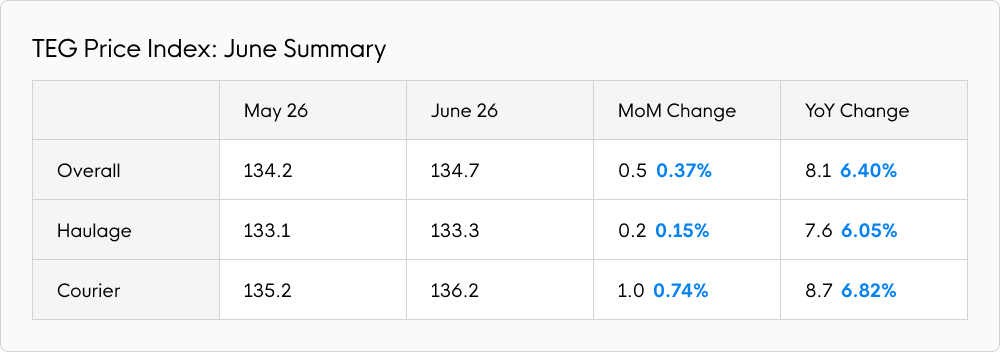
The TEG Price Index rose by 0.5 points (0.37%) in June to reach 134.7. While modest, the increase is the fourth in as many months. Transport prices are now up 8.1 points (6.40%) year-on-year.
The Haulage Index increased 0.2 points (0.15%) in June. Year-on-year, haulage is up 7.6 points (6.05%).
The Courier Index, meanwhile, rose by 1.0 point (0.74%) during June to reach 136.2. Year-on-year, courier prices are up 8.7 points (6.82%).
Buoyant June demand
Haulage demand rose by 7.75% in June, following subdued growth in May. The courier sector, meanwhile, saw demand grow by 12.75%. Recent spells of warm weather, including an unseasonal heatwave, are likely explanatory factors, as is the arrival of the FIFA World Cup.
Elsewhere, carrier availability rose by 16.45% in June. The courier sector led this growth (17.22%) with haulage seeing a noticeable uptick as well (12.44%).
The apparent additional availability likely reflects May’s capacity squeeze. As always, the two bank holidays in May reduced both HGV and LGV availability. June’s increased capacity probably also reflects falling fuel prices, which incentivise increased carrier activity.
Given the volatile geopolitical and economic backdrop, forecasting throughout 2026 has so far proved problematic. Still, with summer demand strong and carrier availability growing, it seems operators are currently making the most of an overdue opportunity.
World cup fever helps demand
Running until 19 July, the FIFA World Cup has likely driven surges in demand for many product categories. This should continue for the duration of the tournament.
Analysis by Money.co.uk suggests the World Cup could bring a £7.6bn boost to the UK economy. According to VoucherCodes.co.uk's 2026 World Cup Spending Report, retail spending linked to the World Cup is forecast to reach £2.9bn. This, says the report, could increase sales for groceries by £1.95bn, hospitality by £900m, electrical goods by £325m, and outdoor equipment by £133m. The British Beer and Pub Association even forecast that 55 million extra pints would be poured if England reach the final.
When you add in other key sporting events such as Wimbledon and the British Grand Prix, plus endless summer festivals, the cumulative effect on freight and courier demand is significant.
Fuel watch
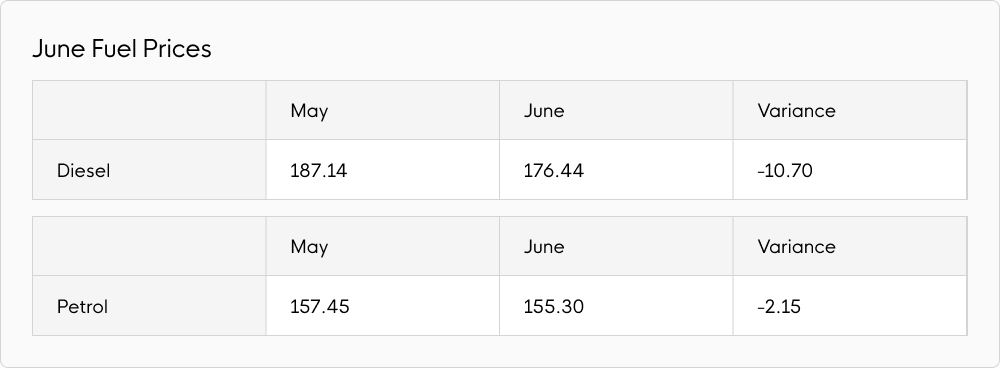
Fuel prices continued to ease last month, largely following Iran and the US signing their memorandum of understanding on 17 June. While a positive development, prices remain significantly higher than in June 2025.
For a second month running, diesel led the fall. Average prices dropped by 10.70p per litre (5.72%) to 176.44p. Nonetheless, diesel remained 37.95p per litre (27.40%) more expensive than 12 months ago.
Average petrol prices also fell in June. They dropped 2.15p per litre (1.37%) to 155.30p. Compared to June 2025, they were 23.4p per litre (17.74%) higher.
Fuel prices will remain uncertain until Iran and the US resolve tensions. Even then, fuel prices may remain high for much of 2026.
Industry pulse
The shoots of a more optimistic economy sprouted in June. Consumer confidence held steady. Meanwhile, the Interactive Media in Retail Group (IMRG) reported the UK online retail market enjoyed five consecutive weeks of positive year-on-year revenue growth. What’s more, annual inflation for May reported lower than expected (2.8% instead of 3%), predominantly due to relatively stable food prices.
Experts urge caution. Many still expect inflation to rise as higher energy prices affect both businesses and consumers. Energy regulator Ofgem increased the price cap by 13% on 1 July. With many factors able to influence future economic metrics, interest rates held at 3.75% for the fourth meeting in a row.
Lower oil prices emerged as middle eastern tensions eased. Brent crude has fallen back to $72 a barrel (1 July), which almost reflects pre-war levels. What happens next is unclear, but with US mid-term elections in November, President Donald Trump will be keen to open the Strait of Hormuz soon.
Expert comment
“The story that inflation held unexpectedly steady was reported mid-month on the basis of the official ONS figures for May and then reinforced by retail trade press reports later in the month using more recent industry-sourced data. The energy shock from the Iran war didn’t have the impact that was originally expected.
As a consumer, that might sound positive, but pressure from the extreme diesel price increase that occurred has to go somewhere - things are tough out there right now for transport operators.”
Kirsten Tisdale – Senior Logistics and Supply Chain Consultant – Aricia Ltd